
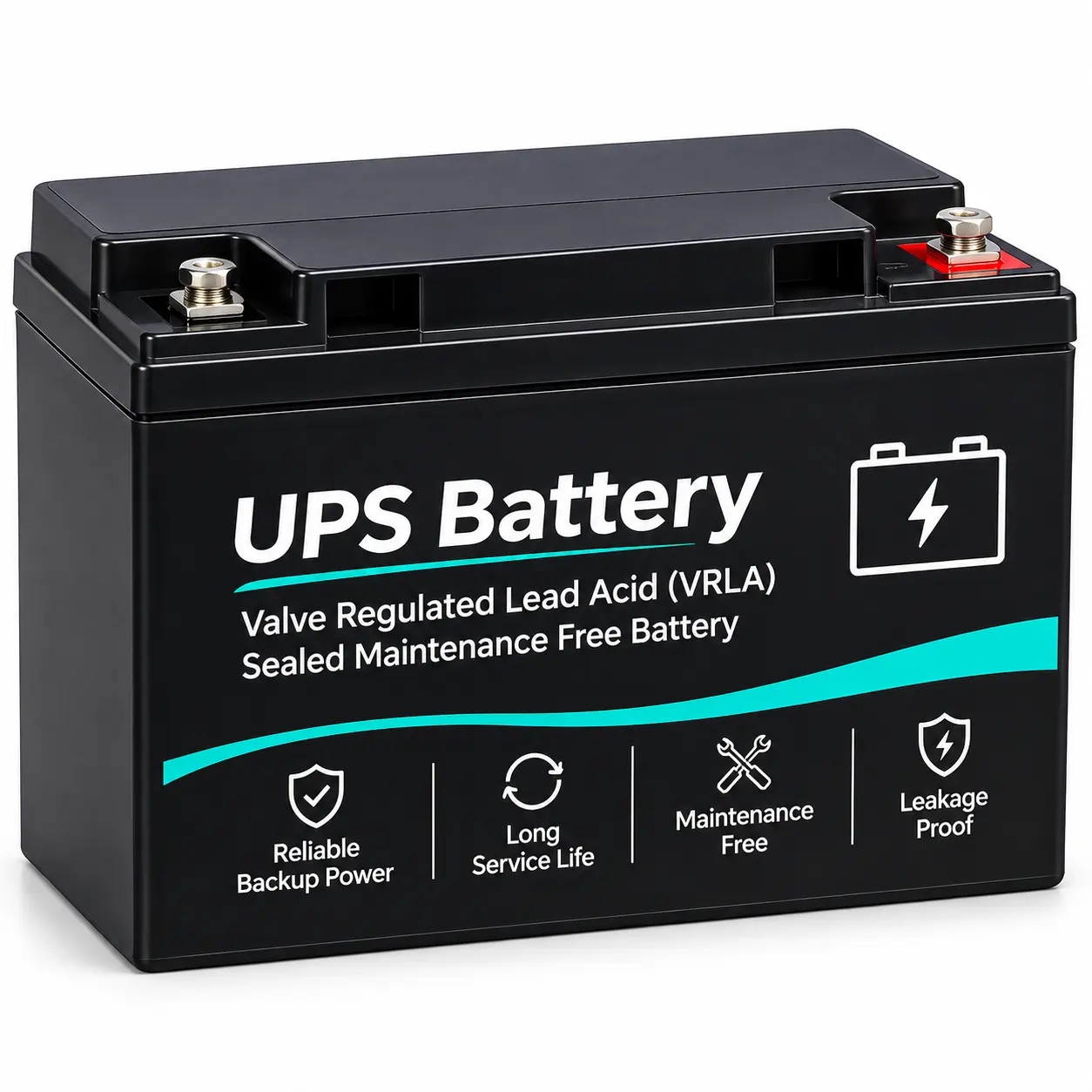
The UPS Battery is an essential component of an Uninterruptible Power Supply (UPS) system. It stores electrical energy and supplies power to connected equipment when the main electricity supply is interrupted.
Depending on the UPS model and application, batteries may use sealed lead-acid (VRLA), AGM, gel or lithium-ion technology. They are available in different voltage ratings and capacities to meet the backup power requirements of residential, commercial and industrial installations.
UPS batteries are commonly used in online UPS, offline UPS, line-interactive UPS, tower UPS and rack-mount UPS systems. Selecting the correct battery requires checking the UPS manufacturer’s compatibility requirements, battery voltage, capacity, dimensions and connector type.
Key Features
-
Provides backup power during mains electricity failure
-
Designed for compatible UPS systems
-
Available in different voltage and capacity options
-
Sealed maintenance-free options available
-
Supports computers, servers and networking equipment
-
Suitable for security, CCTV and communication systems
-
Available in different battery technologies
-
Replacement options for compatible UPS models
Product Specifications
| Specification | Details |
|---|---|
| Product Type | UPS Battery |
| Battery Technology | VRLA / AGM / Gel / Lithium-ion, model-dependent |
| Nominal Voltage | Model-dependent (e.g. 12 V) |
| Capacity | Model-dependent (Ah) |
| Battery Chemistry | Model-dependent |
| Rechargeable | Yes |
| Maintenance | Sealed maintenance-free options available |
| Terminal Type | Model-dependent |
| Design Life | Manufacturer- and model-dependent |
| Application | UPS and backup power systems |
| Compatibility | Compatible UPS models |
| Installation | Internal or external battery configuration, model-dependent |
Reviews
There are no reviews yet.